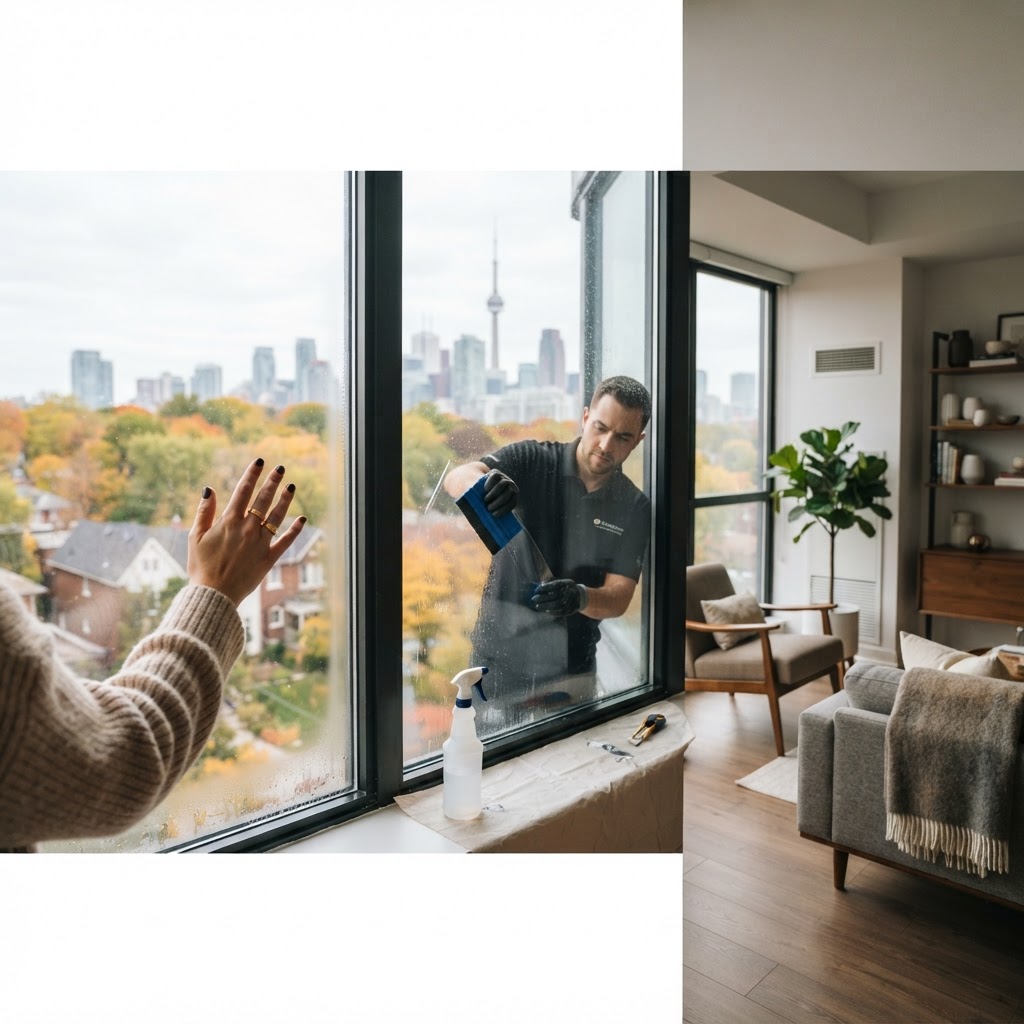
October has arrived in Toronto, and with it the first cold snaps of the season. If you have woken up to foggy, wet glass this week, you are seeing the start of window condensation season. Water beading on the inside of your windows is common across the GTA, but it is worth understanding what it means, when to worry, and what actually fixes it.
Window condensation forms when warm, humid indoor air meets a cold glass surface. The moisture in the air turns back into liquid right on the pane. The colder the glass and the more moisture in your home, the worse it gets. That is why the problem ramps up every year right around now, as furnaces switch on and windows cool down overnight.
What Causes Window Condensation in Toronto Homes
Everyday living puts a surprising amount of moisture into your indoor air:
- Cooking, boiling kettles, and running dishwashers
- Showers and baths, especially in bathrooms without strong exhaust fans
- Houseplants clustered near windows
- Even breathing: a closed bedroom releases about a pint of moisture per person overnight
Toronto's heating season makes it worse. Modern homes are sealed tight to keep heat in, which also traps humidity inside. Older homes with single-pane or worn double-pane windows have the coldest glass, so they fog up first. Condos add another wrinkle: floor-to-ceiling glass gets much colder than walls overnight, so balcony doors and bedroom windows sweat heavily on cold nights.
Where You Will See It First
Bedroom windows are usually the first to fog, because the door is closed and people breathe in the room all night. Bathrooms and kitchens follow close behind. North-facing windows condense more because they get no sun to warm the glass. If you see moisture on a north bedroom window at 7 a.m. in November, you are in good company across the GTA.
When It Is Normal and When It Is a Warning Sign
A light morning fog that burns off by mid-morning is normal seasonal behaviour. Watch for these signs instead:
- Pooled water on the sill every day, or frames that stay damp
- Black spots on the frame, wall, or around the window trim (that is mould, and it needs attention)
- Moisture between the panes of a sealed unit: that is a failed seal, and no amount of ventilation will fix it. The glass unit needs replacing.
Catching the first two early keeps a small moisture issue from turning into a repair bill.
Fixes That Actually Work
- Keep indoor humidity between 30% and 50%. A $20 hygrometer tells you where you stand. If you are above 50% in winter, run a dehumidifier.
- Run exhaust fans longer than you think. Leave the bathroom fan on for 20 minutes after a shower and use the kitchen fan when cooking anything with steam.
- Let warm air reach the glass. Keep blinds slightly open and don't push furniture against the window. Warm air on the glass means less condensation.
- Move plants away from windows for the winter, or at least thin them out.
- Crack a window briefly in the morning in the worst room to exchange moist air for dry outdoor air.
How Window Film Helps Reduce Condensation
Humidity control lowers the moisture in the air, but heat control window film attacks the other half of the problem: cold glass. By adding an insulating layer, quality films keep the interior surface of the glass closer to room temperature. Warmer glass means less condensation forming on it, plus less heat lost through the window all winter, the same principle behind our guide to keeping your home warm with window film.
This is one of the reasons Toronto homeowners install residential window tinting in the fall rather than waiting for spring: the film starts insulating before the deep cold arrives, and the worst of the condensation season is easier to manage.
What Window Film Cannot Fix
Two honest caveats. First, film reduces condensation; it does not eliminate it. If your indoor humidity is 60%, you still need to bring it down. Second, moisture trapped between the panes of a sealed unit is a failed seal. Film cannot reach that moisture, and the glass unit needs replacing. We would rather tell you that up front than sell you film that won't solve your problem.
What It Costs
At Tint by Designs, most residential privacy and frosted films run $7 to $10 per square foot, and heat-control and specialty films are quoted per project based on the glass and your goals. Our full window tinting cost guide breaks down how quotes are calculated, and sending photos and rough window measurements gets you a fast, accurate estimate.
Keep Your Windows Clear This Winter
Condensation is a small warning light on your home's health, and it is much easier to manage in October than in February. If foggy glass, cold rooms, or fading floors are on your list this season, Tint by Designs installs residential window film across Toronto, North York, Scarborough, Etobicoke, Mississauga, Vaughan, Markham, Richmond Hill, and Brampton. Call or text 437-331-5379 or visit our contact page to book a free consultation.