
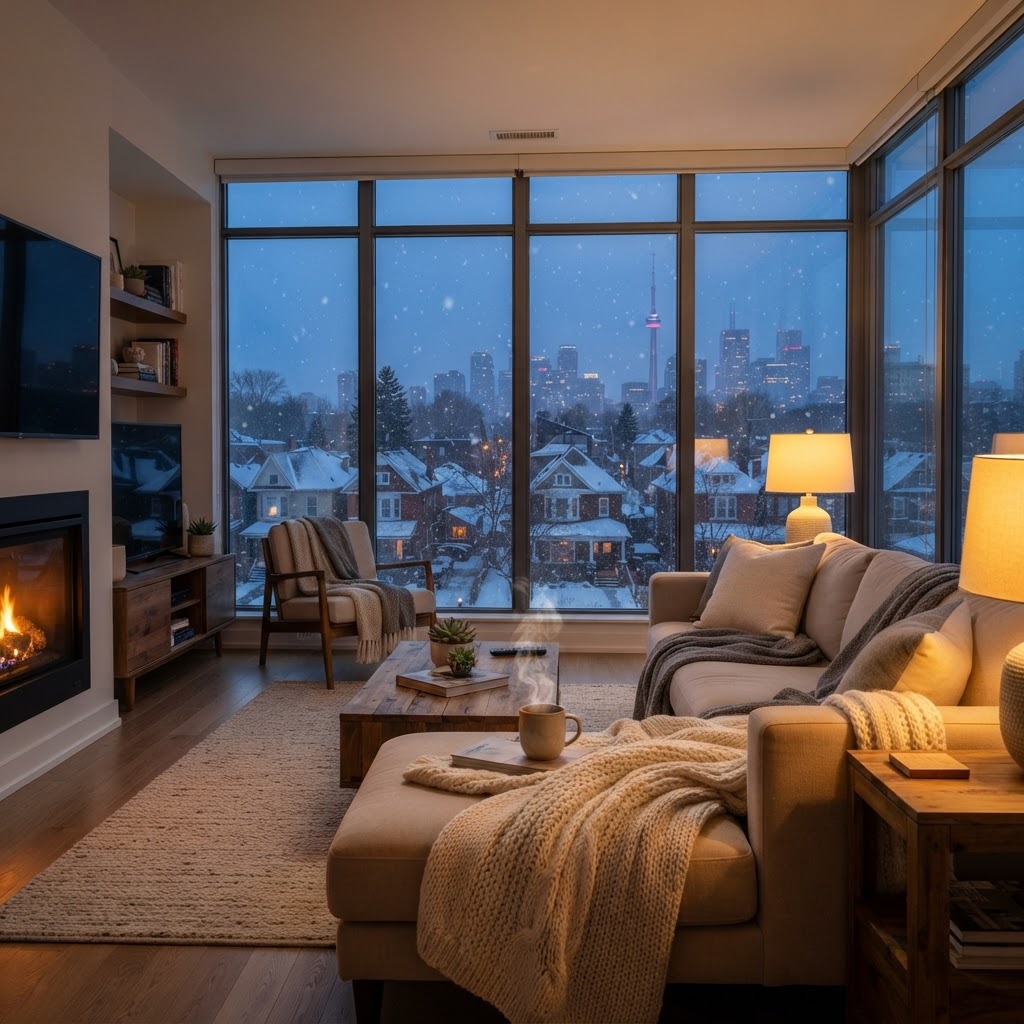
If you live in Toronto or anywhere in the GTA, you already know the drill: the moment November hits, the thermostat goes up and so does your heating bill. What most homeowners don't realize is that a surprising amount of that expensive heat is literally leaking out through their windows - and that a professionally installed window film can dramatically slow that escape.
Window film isn't just a summer product. Yes, it blocks solar heat and glare in July, but modern low-emissivity (low-e) films work both ways: they keep summer heat out and winter heat in. In fact, the best window films for Toronto's climate are engineered specifically for our swings between humid summers and freezing winters. Here's how it works, what it actually saves you, and why fall is the smartest time of year to have it installed.
How Windows Lose Heat in Winter
Glass is the weakest link in your home's thermal envelope. While insulated walls do a decent job holding heat, a single pane of ordinary glass loses heat at roughly ten times the rate of an insulated wall. Even double-pane windows underperform when temperatures plunge.
Heat escapes through windows in three ways:
- Conduction - warmth passes directly through the glass to the cold air outside.
- Convection - cold air moving across the glass pulls heat away from the room.
- Radiation - your furnace's warmth radiates toward cold panes and out of your home.
For older Toronto homes in neighborhoods like East York, the Annex, or Scarborough, this is why the rooms with big windows are always the coldest ones in the house. It's the same reason certain rooms overheat in summer - a problem we cover in depth in our complete guide to window tinting in Toronto.
How Winter-Ready Window Film Works
Here's the part that surprises most people: low-e window film reflects heat back into the room instead of letting it radiate through the glass.
The film carries a microscopically thin metallic or ceramic layer that acts like a one-way mirror for heat. In summer, it bounces solar heat before it enters. In winter, it bounces the warmth from your furnace, fireplace, or baseboard heaters back into your living space instead of letting it radiate out through the pane.
The result is a warmer glass surface, which also eliminates that cold draft feeling near windows - the one that makes you crank the heat and walk around in socks all December.
Curious how low-e compares to solar, privacy, and security options? Our breakdown of the different types of window film explains which film solves which problem.
Interesting Facts Most Homeowners Don't Know
- Windows can account for up to 25-30% of a home's heat loss. For an average GTA home, that's hundreds of dollars per heating season escaping through the glass.
- UV rays fade furniture even in winter. Low winter sun still carries ultraviolet radiation, and UV fading never takes a season off. That's why solar UV protection window film is a year-round investment, not a summer one.
- It's like adding insulation without a renovation. Window film can improve a window's insulation performance at a fraction of the cost of replacing windows - no construction, no mess, usually done in a single visit.
- Winter is peak season for condensation damage. Warmer interior glass means less condensation, which means less risk of mold, mildew, and rot around window frames.
- You keep the view. Today's films are virtually clear - unlike the shrink-wrap plastic kits your parents taped over windows in the 90s, professional film is invisible once installed.
What Kind of Savings Are We Talking About?
Every home is different, but industry studies consistently show that temperature-control window film can reduce heating and cooling costs by up to 30%, with the biggest impact in homes with older or single-pane windows. In a climate like the Greater Toronto Area - hot humid summers and long cold winters - the film works for you in both directions, every single month of the year.
If your January heating bill makes you wince, film on your largest windows is often the fastest payback home improvement available. Homeowners who've made the switch share the full picture in our article on residential window film benefits in Toronto.
Why Fall Is the Best Time to Install Window Film
This is the secret most installers won't volunteer: book in autumn and you skip the rush.
- No summer backlog. Spring and early summer are peak demand for tinting. Fall booking means flexible appointment times and faster scheduling.
- You'll feel the difference immediately. Film installed in October pays you back from the very first cold snap.
- Mild installation weather. Professional-grade films cure best when there's less extreme humidity and temperature, and fall offers ideal curing conditions before deep winter arrives.
- Your home is ready before the deep freeze. You won't be thinking about this in February when the cold rooms are already cold. You'll already be enjoying them.
How to Know If Your Home Is a Good Candidate
Window film is an excellent fit if:
- Your heating and cooling bills feel high for the size of your home.
- Certain rooms are noticeably colder in winter (or hotter in summer) than the rest of the house.
- You have large windows facing north or west that radiate cold.
- Your furniture, hardwood floors, or artwork show fading near windows.
- You'd love new energy-efficient windows but can't justify replacement costs yet.
If you checked even two of those boxes, a professional residential window film assessment is worth your time.
Frequently Asked Questions
Does window film actually help in winter, or is it just for summer heat?
It genuinely helps in winter. Low-e films reflect interior heat back into the room, reducing heat loss through the glass and making rooms feel warmer at the same thermostat setting.
Will the film make my home dark and gloomy during short winter days?
No. Modern ceramic and low-e films are engineered to transmit plenty of visible light while managing heat. Your home stays bright; the glass just stops hemorrhaging warmth.
How long does window film last once installed?
Professional-grade films typically last 15-20 years or more, with manufacturer warranties to match. It's a one-time installation, not a seasonal chore like shrink-wrap kits.
Can it be installed on older single-pane windows?
Yes - and that's where you'll notice the biggest difference. Film upgrades older windows' performance without replacing them, at a small fraction of replacement cost.
Let Tint by Designs Get Your Home Winter-Ready
If cold, drafty rooms and shocking heating bills are part of your winter routine every year, this is the season to change that.
At Tint by Designs, we specialize in professional residential window film throughout the Greater Toronto Area - Toronto, North York, Mississauga, Vaughan, Markham, Scarborough, and beyond. We'll assess your home's actual heat-loss problem, recommend the right film for your windows and your budget, and install it with the kind of precision that comes from doing this every single day.
We only use premium, warrantied films, every install is backed by our workmanship guarantee, and our goal is simple: a warmer home this winter and lower energy bills every month after it.
Winter is coming either way. The only question is whether your windows will be ready for it. Call us today at 437-331-5379 or visit our contact page to book your free in-home estimate.