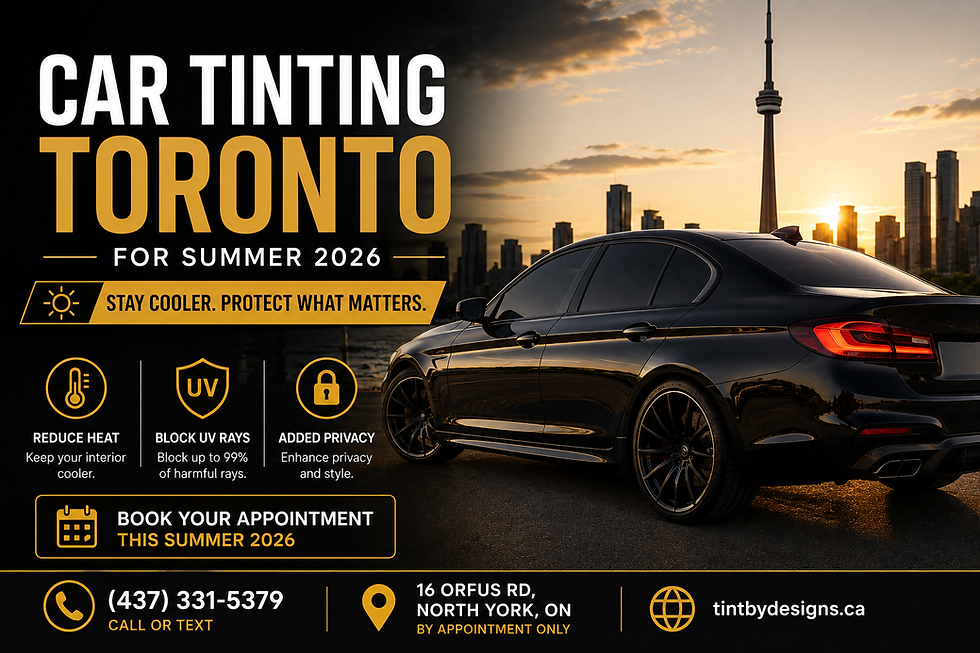
The Ultimate Car Window Tinting Guide: All You Need to Know
- Arsham V
- Dec 30, 2025
- 4 min read

Car window tinting is a popular modification that offers numerous benefits beyond just enhancing the look of your vehicle. Whether you want to protect yourself from harmful UV rays, increase privacy, or reduce glare, understanding the ins and outs of window tinting can help you make the best choice for your car. This comprehensive guide will walk you through everything you need to know about car window tinting, from types of tint to legal considerations and maintenance tips.
Understanding the Car Window Tinting Guide
Window tinting involves applying a thin film to the glass surfaces of your car. This film can vary in darkness, color, and material, each offering different advantages. The primary purpose of tinting is to reduce the amount of sunlight and heat entering your vehicle, which can improve comfort and protect the interior from fading.
There are several types of tint films available:
Dyed Film: This is the most affordable option. It uses a layer of dye to absorb sunlight but may fade over time.
Metalized Film: Contains tiny metallic particles that reflect heat and UV rays. It is more durable but can interfere with electronic signals.
Carbon Film: Offers a matte finish and blocks infrared light effectively without signal interference.
Ceramic Film: The premium choice, ceramic tint blocks heat and UV rays efficiently and does not affect electronic devices.
Each type has its pros and cons, so consider your priorities such as budget, appearance, and performance when choosing.

How to Choose the Right Tint Percentage: Car Window Tinting Guide
One of the most important decisions when tinting your car windows is selecting the right tint percentage. This percentage refers to the amount of visible light transmission (VLT) allowed through the film. For example, a 35% tint means 35% of visible light passes through, while 5% tint is very dark, allowing only 5% of light.
Here are some factors to consider:
Visibility and Safety: Darker tints reduce visibility, especially at night. Choose a tint that balances privacy with safe driving.
Legal Restrictions: Different states and countries have laws regulating how dark your tint can be. Always check local regulations before installation.
Heat Reduction: Lower VLT percentages block more heat, keeping your car cooler.
Privacy Needs: If you want maximum privacy, opt for a darker tint, but be mindful of legal limits.
For most drivers, a tint between 35% and 50% offers a good balance of privacy, heat reduction, and visibility.
Is 35% or 50% Tint Darker?
When comparing 35% and 50% tint, the 35% tint is definitely darker. This means it allows less light to pass through the window, providing more privacy and better heat rejection. However, the darker tint can also reduce visibility, especially in low-light conditions.
35% Tint: Allows 35% of visible light through. It is noticeably darker and offers better protection from sunlight and prying eyes.
50% Tint: Allows 50% of visible light through. It is lighter, providing a clearer view while still reducing glare and heat.
Choosing between these two depends on your priorities. If you want more privacy and heat protection, 35% is better. If you prefer better visibility and still want some tint benefits, 50% is a good choice.

Benefits of Car Window Tinting
Tinting your car windows offers several practical benefits beyond aesthetics:
UV Protection: Quality tint films block up to 99% of harmful UV rays, protecting your skin and preventing interior fading.
Heat Reduction: Tinting can reduce heat inside the car by up to 60%, making your ride more comfortable and reducing air conditioning use.
Glare Reduction: Tinted windows reduce glare from the sun and headlights, improving driving safety.
Increased Privacy: Darker tints prevent outsiders from easily seeing inside your vehicle.
Shatter Resistance: Tint film can hold shattered glass together in case of an accident, enhancing safety.
Enhanced Appearance: A well-tinted car looks sleek and stylish, adding to its curb appeal.
Legal Considerations and Regulations
Before getting your windows tinted, it is crucial to understand the legal limits in your area. Tint laws vary widely by state and country, and non-compliance can result in fines or having to remove the tint.
Common regulations include:
VLT Limits: Most places specify minimum VLT percentages for front side windows, rear side windows, and rear windshield.
Reflectivity: Some laws restrict how reflective the tint can be.
Medical Exemptions: Certain medical conditions may allow for darker tints with proper documentation.
Certification: Some regions require tint films to be certified and installed by licensed professionals.
Always check your local Department of Motor Vehicles (DMV) or equivalent authority for the most current rules.
How to Maintain Your Tinted Windows
Proper care will extend the life of your window tint and keep it looking great. Here are some maintenance tips:
Wait Before Cleaning: After installation, avoid rolling down windows or cleaning for at least a week to allow the film to cure.
Use Gentle Cleaners: Avoid ammonia-based or abrasive cleaners. Use a mild soap solution and a soft cloth or sponge.
Avoid Sharp Objects: Be careful not to scratch the tint with keys, rings, or other sharp items.
Regular Cleaning: Clean your windows regularly to prevent dirt buildup, which can degrade the film.
Inspect for Damage: Check for bubbles, peeling, or discoloration and address issues promptly with your installer.
DIY vs Professional Installation
While DIY tint kits are available, professional installation is highly recommended for the best results. Professionals have the tools and experience to apply the film smoothly without bubbles or creases. They also ensure the tint complies with local laws and provide warranties.
If you choose to do it yourself, follow instructions carefully and practice on a small window first.
By understanding the different types of tint, legal requirements, and maintenance tips, you can make an informed decision about your car window tinting. Whether you prioritize privacy, heat reduction, or style, the right tint can enhance your driving experience significantly. For more detailed information and professional services, consider exploring trusted resources on car window tinting.